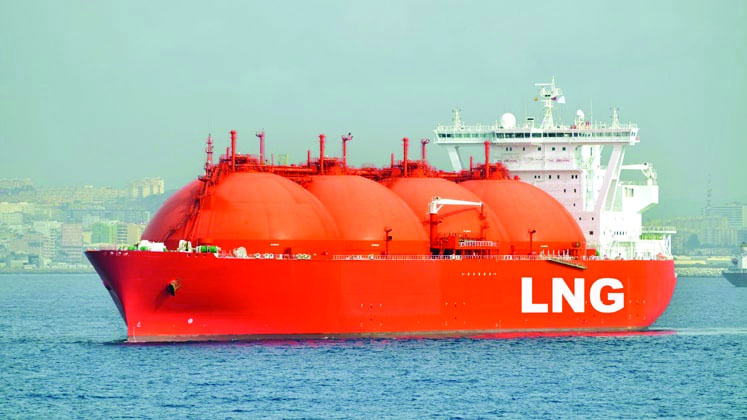
Rising geopolitical tensions in the Middle East surrounding the Israel-Iran conflict have triggered fresh concerns in global energy markets, with Bangladesh’s import-dependent energy sector facing potential disruption. Industry insiders and energy experts warn that any obstruction in the Strait of Hormuz could severely affect the country’s liquefied natural gas (LNG) imports, intensifying gas shortages and placing additional strain on the power sector.
According to officials and sector analysts who spoke to The Daily Industry, Bangladesh’s heavy reliance on LNG transported through the Strait of Hormuz makes the country particularly vulnerable to prolonged instability in the region.
Heavy Dependence on LNG Imports: Sources at Petrobangla said that domestic gas fields are currently supplying around 1,700 million cubic feet per day (mmcfd) of natural gas. An additional 800 to 900 mmcfd is being added through imported LNG, meaning a substantial portion of total supply now depends on foreign sources.
Officials noted that almost all LNG imported under Bangladesh’s long-term contracts passes through the Strait of Hormuz. Bangladesh began importing LNG from Qatar on a government-to-government (G2G) basis in 2018 and later started imports from Oman in September 2020. Petrobangla and RPGCL sources confirmed that Bangladesh imports approximately six million tonnes of LNG annually, of which around four million tonnes come from Qatar.
Petrobangla Chairman Md Erfanul Haque told reporters that at least nine LNG cargoes are scheduled to arrive at Maheshkhali this month. However, he acknowledged uncertainty if maritime traffic through the Strait of Hormuz is disrupted.
“If vessel movement through the Strait of Hormuz is obstructed, there could be uncertainty regarding one or two cargoes between the 15th and 18th of this month,” he said. “The cargoes scheduled to arrive before the 15th under long-term contracts have already crossed the Strait.”
He added that while there is currently no plan to import LNG from the spot market this month, alternative sourcing may be considered if the conflict prolongs.
Industry and Power Sector Under Pressure: Bangladesh has already been grappling with persistent gas shortages affecting industries nationwide. Manufacturing units, power plants, residential users, and transport sectors have all been facing supply disruptions.
Entrepreneurs from the garment and ceramic industries told The Daily Industry that many factories are operating below capacity due to inadequate gas supply. A further reduction in LNG imports could significantly hamper production, threaten employment, and reduce export earnings.
“If LNG supply declines further, industrial output will be severely affected,” said a leading garment exporter. “This will impact investment decisions and overall economic stability.”
Energy division officials warned that a prolonged disruption could exacerbate the already critical gas deficit, intensifying challenges for industrial production and electricity generation.
Power Generation Risks: Gas remains the dominant fuel for electricity generation in Bangladesh. As summer approaches and electricity demand rises, any disruption in gas supply could lead to increased load shedding.
Member (Generation) of the Bangladesh Power Development Board, Md Zahurul Islam, told The Daily Industry that daily electricity demand is steadily increasing.
“Currently, we are generating around 5,000 megawatts from gas-fired power plants,” he said. “The remainder comes from coal, oil, and imported electricity. If fuel imports are disrupted, power generation will inevitably be affected.”
Energy analysts cautioned that if LNG spot market prices rise due to geopolitical instability, the cost of electricity generation will increase, putting additional financial pressure on the power sector and potentially leading to higher subsidies or consumer tariffs.
Fuel Oil Supply: Temporary Relief: While LNG imports face potential risks, refined fuel oil supply appears stable for now. The Bangladesh Petroleum Corporation (BPC) said it does not foresee any immediate supply crisis.
BPC officials confirmed that Bangladesh currently holds approximately 20 days’ worth of fuel oil stock, with an additional 20 to 25 days’ supply either in transit or awaiting discharge.
The government has approved the import of 2.82 million tonnes of fuel oil between January and June. A significant portion will be sourced through open tenders from Singapore, Malaysia, China, and Indonesia, reducing reliance on routes passing through the Strait of Hormuz.
BPC Chairman Engineer Rezanur Rahman said that fuel import contracts are typically signed for six-month terms and that supply is secured until June.
“Oil will be imported from China, Malaysia, Singapore, and Indonesia-routes that are not directly impacted by the Iran crisis,” he said. “Currently, we have more than 20 days’ stock of all types of fuel, and several vessels are on the way.”
However, sector insiders noted that crude oil imports from Saudi Arabia and the United Arab Emirates could face risks if the conflict escalates. As a contingency measure, authorities are reportedly prepared to use the Fujairah terminal as an alternative route.
Broader Economic Risks: Energy experts told The Daily Industry that if the conflict extends beyond two weeks, Bangladesh could face significant pressure across multiple energy segments, including gas, LPG, coal, and petroleum products.
A sustained disruption would likely result in higher import costs, increased subsidy burdens, and additional strain on foreign exchange reserves-already under pressure from rising global commodity prices and domestic economic adjustments.
Commerce Minister Khandaker Abdul Muqtadir said the government is closely monitoring the situation.
“We will observe developments for a few more days. Similar crises have occurred in the past,” he said. “The government is cautious regarding the supply of essential commodities and fuel in light of international instability surrounding the Strait of Hormuz.”
He assured that there is no immediate reason for public concern and that contingency preparations are in place.
Expert Opinion: Energy expert Dr Ijaz Hossain expressed cautious optimism but warned of potential escalation.
“We hope the war situation will normalize soon. In that case, Bangladesh should not face major problems,” he told The Daily Industry. “There may be some disruption in LNG supply. However, if the conflict continues for more than two weeks, there will be a significant crisis in the supply of all types of fuel. Costs will also rise.”
Analysts believe that the three major risks Bangladesh faces are rising international energy prices, increased import expenditure, and fresh pressure on foreign currency reserves.
Strategic Implications: The evolving crisis underscores Bangladesh’s growing dependence on imported energy and highlights the importance of diversification strategies, including domestic gas exploration, renewable energy expansion, and alternative LNG sourcing.
While immediate supplies remain stable, experts caution that prolonged geopolitical instability in the Middle East could test the resilience of Bangladesh’s energy security framework.
As global markets react to unfolding developments, policymakers face the delicate task of balancing energy supply stability, fiscal sustainability, and economic growth.
For now, authorities remain watchful. But as one senior energy official told The Daily Industry, “If the Strait of Hormuz becomes a chokepoint for an extended period, the ripple effects will not spare Bangladesh’s power and industrial sectors.”