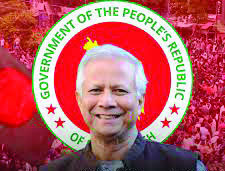
The interim government headed by Dr. Muhammad Yunus is being brought into legal framework. For this purpose, the Advisory Council has given final approval to the draft of the ‘Interim Government Ordinance, 2024’. If the ordinance is promulgated, the existing interim government can’t be invalidated or annulled by questioning its validity in the courts.
The tenure of the current government will be till the day the new prime minister elected through the 13th national parliament election takes office.
Awami League president Sheikh Hasina resigned from the post of Prime Minister on August 5 in a student-public coup.
Under special circumstances, an interim government was formed under the leadership of Muhammad Yunus on August 8. As the Fifteenth Amendment to the Constitution abolished the Non-Party Caretaker Government, the Constitution currently has no Caretaker or Interim Government system and the post of Chief Adviser or Adviser.
For this reason, the Advisory Council gave the final approval of the Interim Government Ordinance, 2024 on September 19, so that the legal basis of the interim government does not arise.
The Ordinance prescribes the rank, privileges and immunities of the Chief Advisers and Advisers of the Interim Government as those of the Chief Advisers and Advisers of the defunct Caretaker Government. However, although the maximum number of advisers has been fixed in the caretaker government system, now the maximum number of advisers is not fixed.
In the draft ordinance prepared by the Department of Law and Justice, the clause regarding the tenure of the interim government states that the interim government will remain in place from the date on which the chief adviser assumes the duties of the chief adviser to the interim government until the date when the new prime minister takes office after the formation of the Thirteenth National Parliament.
Earlier in the constitution, the term of non-party caretaker government system was fixed for 90 days.
What will be the work of the interim government has also been decided in the finalized ordinance. It is said in the relevant section that the interim government will serve as a temporary or temporary government. Government will work with the help of government employees.
To assist and assist the Election Commission in conducting free, fair, impartial and participatory elections of Members of Parliament and in carrying out the duties prescribed by the Constitution or any other law.
The clause ‘Validity of Ordinances and Proceedings of the Interim Government’ states, ‘Notwithstanding anything to the contrary contained in the Constitution or any other law for the time being in force, the date on which the Prime Minister assumes his office after the formation of the Interim Government and the formation of the new Parliament shall (including both days) all powers exercised by the Interim Government, all ordinances, rules, regulations made, Notifications issued, orders issued, actions taken, measures taken shall be deemed to have been duly executed, made, issued, given, done and accepted in accordance with law and no court or other authority including the Supreme Court of Bangladesh shall in any way raise any question as to their validity or invalidate or invalidate them. Can’t.’
It is also said, “If there is an error in the formation of the interim government under the Interim Government Ordinance, the appointment of the chief adviser or any advisers, no act will be illegal, and no question or case can be filed in any court for this.”
The draft of the new ordinance states, “Notwithstanding anything contained in other existing laws, the President shall act on the advice of the Chief Adviser during the Interim Government.” The Chief Adviser should be consulted on the validity of the declaration of emergency.’
Who will be advisers, what are facilities?
According to the constitution, a person cannot become a member of parliament unless he has completed 25 years of age. Ministers, State Ministers and Deputy Ministers are appointed from among the Members of Parliament. One-tenth of the posts in the Cabinet may be nominated from among those eligible to be elected as Members of Parliament. That is, their age must be at least 25 years.
At least 25 years of age are required to become an advisor to the Interim Government. In this regard, it has been said in the draft ordinance that no one under the age of 25 will be appointed to the post of chief advisor and advisor. A person who has been declared a natural person by a court, has not been discharged from liability after being declared bankrupt, has acquired the citizenship of a foreign country, or has declared or acknowledged allegiance to a foreign country cannot be appointed to these positions. Apart from this, those who have been convicted of any criminal offense involving moral turpitude and have been sentenced to imprisonment for a term of not less than two years and have not been released for five years shall not be appointed to these posts.
Apart from this, it is said in the draft of the Ordinance that even if they do not agree on this, they will not be appointed as chief advisers or advisers.
Principal advisers and advisers may resign by written and signed letter addressed to the President. If the post of chief adviser becomes vacant due to resignation, death or any other reason, the president can appoint one of the advisers as chief adviser.
According to the draft of the new ordinance, the chief adviser will have the rank, remuneration and privileges of the prime minister and the advisers will have the rank of ministers. There are laws about what privileges the Prime Minister and members of the cabinet will get.
When the Interim Government Ordinance can be issued, it is not known even after contacting the two advisors of the government.
However, an official of the cabinet department said on condition of anonymity, “After approving the draft ordinance in the advisory council meeting, we checked various issues. We think that the draft is in the final stage if no further instructions come from the government.